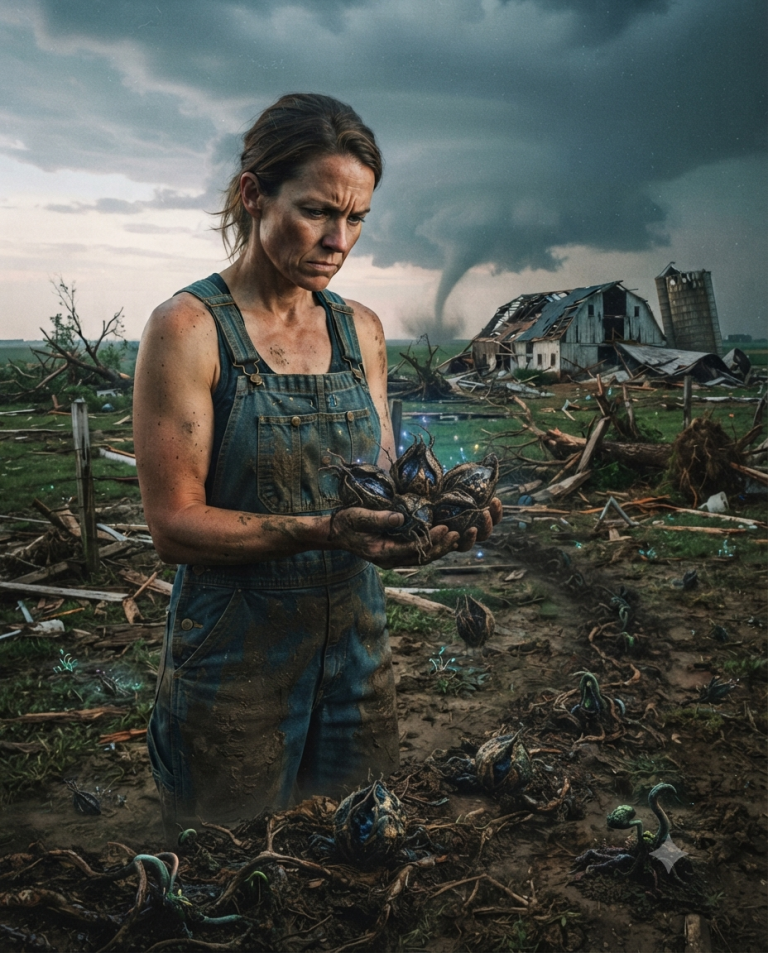
He Gave A Homeless Woman A Job — Months Later, She Saved His Ranch

Chapter 2
Mary’s room was barely larger than a storage closet.
But to her, it felt like a palace.
There was a narrow bed.
A wooden chest.
A small wash basin.
One candle.
And a window.
She stood beside it for several minutes after Jonathan left.
Rain tapped against the glass.
For the first time in months, she had a door she could close.
She touched the blanket.
It was clean.
She sat on the bed.
Then she began to cry.
Quietly.
She had forgotten what it felt like to have somewhere she was expected to wake up.
The next morning, she rose before dawn.
Jonathan found her already in the kitchen.
She had cleaned the fireplace, prepared porridge, kneaded bread, and discovered that the cook’s pantry was a disaster.
Jonathan stood in the doorway.
“You’ve been busy.”
Mary looked over her shoulder.
“The flour was infested.”
“What?”
“Worms.”
He walked to the pantry.
She was right.
“You’re sure?”
“I’ve cooked in worse conditions.”
He examined the sack.
“How did you know?”
“My mother taught me.”
Jonathan nodded.
“Throw it out.”
“I already did.”
He looked at her.
“You’re direct.”
“I’ve learned that hunger doesn’t respond well to politeness.”
That answer stayed with him.
Over the next weeks, Mary became indispensable.
She repaired the kitchen’s broken shelves.
She organized the pantry.
She began keeping records of food consumption.
She discovered that two hired hands were taking extra portions of meat home.
She did not accuse them.
Instead, she quietly changed the system.
Every ration was measured.
Every sack was recorded.
Every barrel was marked.
Jonathan noticed.
“You’ve cut our kitchen expenses by nearly a quarter.”
Mary shrugged.
“Your accounts were poorly kept.”
“My accounts?”
“Yes.”
“I’m the owner.”
“That doesn’t make you good at arithmetic.”
Jonathan stared.
Mary returned to her ledger.
He laughed.
It was the first time she had heard him laugh.
“You’re going to be trouble.”
“I’ve already been trouble.”
He stopped smiling.
“What do you mean?”
She closed the ledger.
“Nothing.”
He did not press her.
Not then.
Jonathan had learned early that some wounds healed only when left alone.
But Mary was not simply a good housekeeper.
She understood horses.
She could judge grain quality.
She knew when rain would damage hay.
She knew which cattle were becoming sick before symptoms became obvious.
And she could read.
That last skill surprised Jonathan.
“Where did you learn?”
“My father.”
“Was he a gentleman?”
“No.”
“Then how?”
“He believed a person who couldn’t read could be cheated by anyone.”
Jonathan smiled.
“Your father sounds wise.”
“He was.”
Mary looked down.
“Until he wasn’t.”
Jonathan noticed the sadness.
Again, he said nothing.